Page Prentice, the state lead for desert bighorn sheep in California, delivered a presentation titled “Maintaining Desert Wildlife: Benefits and Challenges of Managing Artificial Water Sources in Arid Regions.” It was a highly engaging talk in which she covered various technical aspects of artificial water sources—such as types, construction, and maintenance—as well as their impact on wildlife populations. She also addressed the consequences that can arise from the improper maintenance of this infrastructure.
According to Prentice, any individual, group, or institution interested in installing an artificial water source should ask themselves three questions: What? Why? Who? The “what” refers to the type of water source to be built; the “why” concerns the species intended to benefit and the specific circumstances necessitating such an intervention; and the “who” relates to those responsible for the construction and upkeep of the water source. Projects that clarify these points from the outset are the ones that succeed and truly make an impact on the conservation of wildlife populations, the speaker noted.
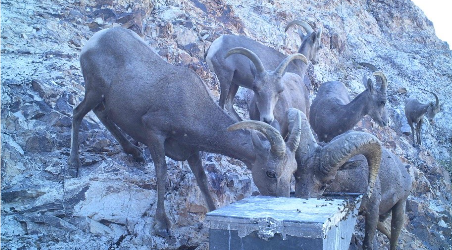
Prentice pointed out that artificial water sources are vital for the conservation of desert bighorn sheep, as these animals significantly increase their water consumption during the summer. She explained that, in California, this reality is well understood, which has led to the installation of approximately 100 artificial water sources across the Mojave and Sonoran deserts.
You can watch the full presentation via the UABC Foundation’s Facebook page or the Santuario Cimarrón website: https://www.facebook.com/share/v/1AZBZ2BgG3/; https://santuariocimarron.com/conferencias/.